 EN
EN

How to construct water-based obstacles like those in Tough Mudder?
Ever looked at a wall of mud and water and thought to yourself, "How the heck do they do this?" If you want to craft the same exhilarating experience, you’ve come to the right place. Water obstacles are event favorites and world-class challenges. They test strength, grit, and balance, all while embracing the glorious mess. This guide will walk you through the intricacies of building epic water obstacles, drawing on deep industry knowledge.
The Splash Zone: Why Water Features Are Awesome
Let's face it, without water, a race is just a long run. Water adds variety, engages your senses, cools participants, and creates dynamic challenges. It’s not just about crossing the finish line—it’s about creating unforgettable experiences and memories. To build great water obstacles, you need to think about the entire process: design, construction, materials, and an unwavering commitment to safety.
Water Source and Terrain: Your Blueprint Starts Here
Before designing your obstacles, you need to analyze the course terrain and water source.
Natural or Man-Made: The ideal course has a natural water source, like a shallow creek or pond. These features can greatly enhance your layout. Without one, you’ll need to create a water containment system, which involves excavation and waterproof lining. Always prioritize checking local regulations and permits for water use and land modification.
Working with the Land: The best courses feel organic. Use natural dips and hills for water slides and trenches. Your obstacles shouldn’t feel plopped down—they should feel like a thrilling part of the landscape. Proper drainage planning is also critical to manage flooding and mud.
Choosing the Right Stuff: Materials That Can Take a Beating
A Tough Mudder-level course demands durable materials. Water, mud, and hundreds of eager athletes create a punishing environment.
Frames and Structures: Thin materials won’t cut it. Opt for heavy-duty, powder-coated steel or marine-grade aluminum. These resist corrosion and, with robust welding and joint design, can handle dynamic loads from rushing water, climbing walls, and swinging obstacles for years.
Slippery Surfaces: This is where engineering meets fun. Textured PVC and HDPE are excellent for slides and obstacles like the famous "Arctic Enema." They are moldable, customizable, and can be designed to be slippery and challenging—but not impossible.
Creating the "Wow" Factor: Design Ideas That Excite
This is where creativity meets engineering. Think about how water can challenge participants in different ways:
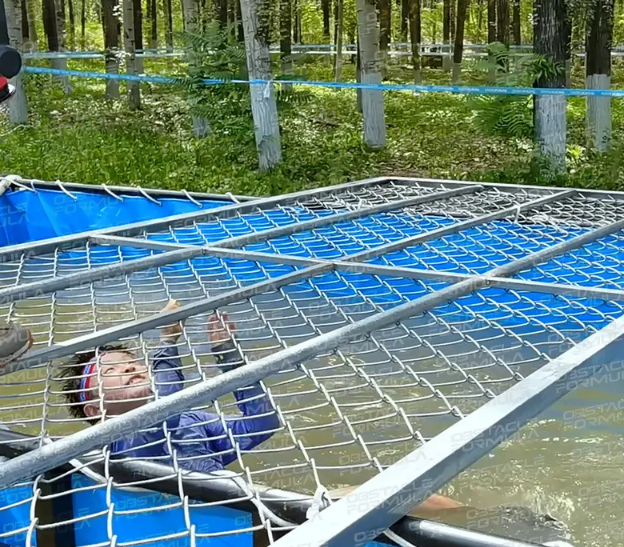
Full Immersion: Dunk tanks, pits, and trenches. These can be standalone or combined with crawls, balances, or climbs. Adding a layer of safe, clean foam can create a disorienting and fun twist.
The Slippery Ascent: Classic water walls and slick ramps. The challenge is the lack of traction. Vary the height and slope to cater to different skill levels, and consider how teamwork might be part of the solution.
Hybrid Challenges: Combine water with other elements. Think rope swings over a pit or a cargo net climb with spraying water. These obstacles test agility, strength, and nerve simultaneously.
A great design team thinks like both an athlete and an artist. They build experiences tailored to the event—whether it’s the endurance focus of a Tough Mudder, the speed of a short-course race, or the technical demands of Ninja racing.
Safety Is Non-Negotiable
Thrills should never come at the expense of safety. It must be integrated into every design.
Water Quality: Stagnant water is unsafe. Have a plan for regular water changes, filtration, or circulation to ensure participant health.
Depth and Clearance: Calibrate water depth carefully—deep enough for safe immersion but shallow enough to stand if needed. Ensure ample clearance for any overhead elements to prevent collisions.
Surfaces and Supervision: All underwater edges must be smooth and blunt. Always have trained lifeguards or spotters present and visible, and post clear safety rules. A safe obstacle is a fun obstacle.
Built to Last: The Long Game
Your event might last a weekend, but your obstacles should last for seasons. This hinges on two factors: manufacturing quality and ongoing support.
Precision Manufacturing: Obstacles should be built with a modular system allowing easy inspection, maintenance, and part replacement. For organizers, knowing a damaged component can be swapped out seamlessly is invaluable and extends the investment’s lifespan.
After-Sales Support: The relationship shouldn’t end at delivery. True partners offer reliable after-sales service, whether you’re a major brand or a local club. They stand by their products because they are built to a standard, not just to a price.
Bringing Your Vision to Life
You have the land, the vision, and the safety plan. Now, partner with experienced fabricators. Look for a proven track record with top-tier events. A good partner brings knowledge of material stress points, assembly logistics, and scalable solutions for any budget. They help turn your concept into a robust, crowd-pleasing reality.
Making a Lasting Impression
Building epic water-based obstacles is a thrilling project that blends engineering, creativity, and a deep understanding of the athlete’s journey. Start with a solid site plan, choose indestructible materials, innovate within a safety-first framework, and partner with experts who build for longevity. This is how you create the iconic, splash-filled challenges that define a brand—the ones that create the stories, laughter, and triumphant finishes that keep participants coming back year after muddy, wonderful year.