 EN
EN

How to choose the right obstacles for your first obstacle race event?
Organizing your first obstacle race event is incredibly exciting. You're not just planning a race; you're creating a memorable experience, a story that participants will talk about long after they cross the finish line. But with so many types of walls, climbs, crawls, and carries out there, how do you decide what makes the cut? Choosing the wrong obstacles can lead to bottlenecks, safety issues, or a course that feels either too easy or discouragingly hard.
The secret isn't about picking the coolest-looking gear. It's about thoughtful curation. You're designing a journey—a physical and mental narrative that flows from start to finish. The right mix of obstacles will challenge but not break your participants, encourage teamwork, and, most importantly, deliver huge smiles and a massive sense of accomplishment. It’s the key to transforming a simple run into a truly epic obstacle race.
Drawing from the experience of those who design for global championships, the goal is to build a course that is accessible, safe, and wildly fun. Let’s walk through the essential questions to ask yourself to select the perfect obstacles for your inaugural event.
Start with Your Audience and Event Vision
Before you look at a single obstacle catalog, close your eyes and picture your event. Who is it for? This is the most critical question. Is this a family-friendly community fundraiser, a corporate team-building challenge, or a serious test for fitness enthusiasts? A course for beginners and families should feel welcoming and achievable, while one for seasoned athletes needs to provide a genuine test.
Define your event's personality. Are you aiming for a muddy, playful adventure or a clean, skill-focused competition? Your theme guides everything. A "Tough Mudder" style event emphasizes teamwork and shared struggle, often with fun, messy elements. A "Spartan Race" style event is more about individual grit and overcoming specific physical tests. Knowing your "why" and "who" creates a filter for every obstacle you consider, ensuring they align with the experience you want to deliver.
Prioritize Safety and Accessibility for First Timers
For a first event, safety is your top priority. This builds trust, protects your participants, and ensures your event’s reputation. The best obstacles for newcomers have a low risk of serious injury and offer intuitive ways to tackle them.
Look for obstacles with multiple completion paths or built-in assistance. For example, a 6-foot wall might have a kickplate for a foothold, while an 8-foot version next to it is for those seeking a bigger challenge. Obstacles like low crawls (under netting or barriers), simple carries (like a sandbag or bucket), and basic balance beams are fantastic starters. They are challenging yet approachable.
Always consider the landing and transition areas. Ensure there is safe, clear space around each obstacle. Use impact-absorbing mats under any obstacle where a fall is possible, like monkey bars or swinging elements. Your number one job is to send everyone home tired and happy, not injured.
Create a Balanced and Flowing Course Experience
A great course is like a good story: it has pacing, variety, and a satisfying arc. You want to engage different muscle groups and skills to prevent early burnout and keep things interesting.
Think about the rhythm. Don’t place three upper-body-intensive obstacles back-to-back. Follow a tough rope climb with a lighter, skill-based challenge like a set of zigzag balance logs. Mix categories:
Strength/Carry: Sandbag carry, bucket brigade, tire flip.
Agility/Balance: Balance beams, stepping stones, low hurdles.
Grip/Upper Body: Simple monkey bars, a short rope traverse, a low cargo net climb.
Mobility/Crawl: Tunnels, under-net crawls, water dips.
This variety prevents any one muscle group from failing completely and allows participants to recover slightly between different types of effort. It makes the course feel fair and well-designed.
Match Obstacles to Your Venue and Logistics
Your beautiful obstacle ideas need to work in the real world. Consider your venue carefully. A flat city park is very different from a rugged hiking trail with natural hills and water features.
A flat venue might need more built structures for vertical challenge. A natural, hilly terrain provides built-in difficulty, so you might need fewer massive obstacles and can use the landscape itself (like a steep mud hill climb). Also, think about access: Can a truck deliver and place large obstacles? Do you have the volunteer crew to staff and monitor each one?
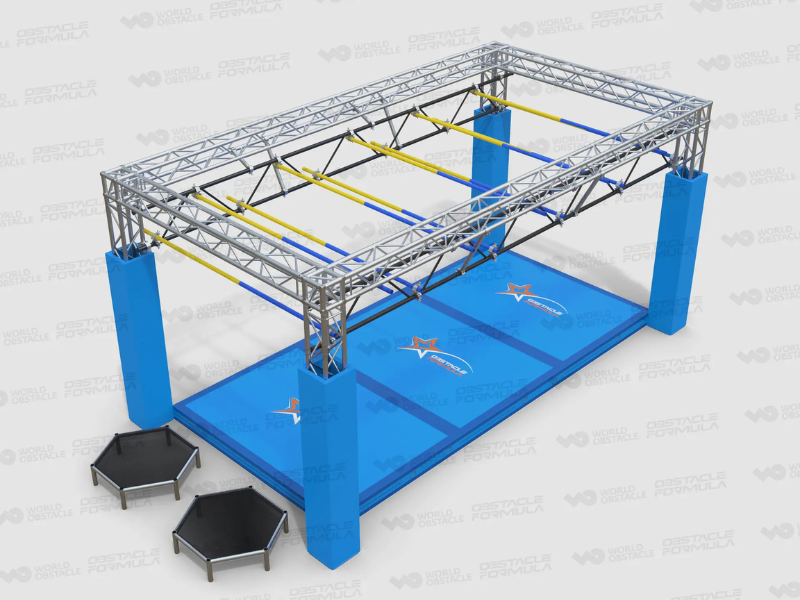
For a first event, scalability is wise. Modular obstacles—like those built with interlocking aluminum truss systems—are a smart choice. They are easier to transport, set up, and adapt to different spaces. They let you start with a professional-looking course without a massive permanent infrastructure investment.
Plan for Growth and Participant Feedback
Your first event is a learning platform. View it as Chapter One, not the whole book. Choose a core set of obstacles that you know you can execute safely and smoothly.
It’s better to have 10 well-run, great obstacles than 20 poorly managed ones. Use this event to gather data. Which obstacles created fun bottlenecks and camaraderie? Which ones caused unexpected confusion? Where did people smile the most? Participant feedback and your own observations are pure gold for planning your second, even better event.
This approach allows you to build a reputation for quality and fun. You can then gradually introduce more complex or signature obstacles—perhaps a unique climbing wheel or a daring wall—as your event series grows and your operational confidence increases.
Bringing Your Vision to the Start Line
Choosing obstacles for your first race is an act of creation. By focusing on your audience, championing safety, striving for balance, respecting logistics, and planning for the future, you lay a foundation for success.
Remember, the goal is to create an inclusive challenge where the primary obstacle isn't the wall in front of them, but the doubt in their own mind. When they conquer it, the victory is unforgettable. This philosophy of participant-first design is what drives the industry's leading creators, who spend years engineering obstacles that are not just physically demanding, but also mentally rewarding.
Now, take these principles, sketch out your course map, and start building the event that will launch a thousand stories. The mud, the laughter, and the triumphant finish line await.