
 EN
EN

Understanding the safety standards for international World Obstacle events.
While watching a world-class obstacle race, everything appears to be effortless. Athletes navigate obstacle courses with precision. Many people do not see the countless hours of careful planning that go into the construction of safe obstacles. For World Obstacle-sanctioned events, safety is integrated into every aspect of the event.
For those working on an event of this size, understanding the complexity of the safety systems is critical. Here’s a breakdown of the most important elements.
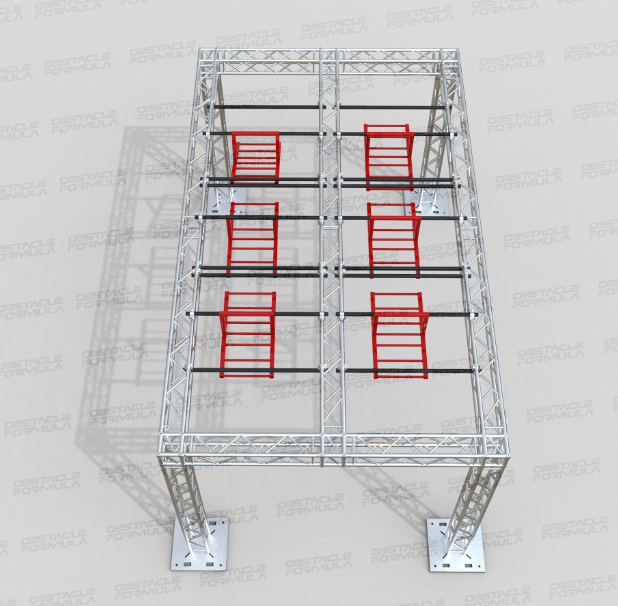
The importance of design and engineering
The construction of an obstacle course that will be safe for any athlete begins at the design phase. Obstacle events at this level of participation involve the careful construction, not assembly, of obstacles.
As with all other types of construction, such as bridges, all obstacles also consider the potential misuse by the user of the obstacles. How much weight will this hold? What happens when someone swings hard? What would happen when all the athletes on that obstacle at the same time? All of these questions are not answered by guess work. All of these questions are the basis of engineering.
Consider the materials. The steel must not fracture, the welds must hold, the wood must be treated to avoid splinters, the obstacles must withstand all kinds of weather, wear, and abuse, and so, the obstacles must be reliable at any level of competition.
Design and materials matter
Not all materials will be used to make an obstacle and therefore, and also, the materials must be of the highest quality. World class events are held international and therefore, the materials must also be of the highest standard, especially with regards to safety.
Consider steel structures. For instance, they must be coated to be protected against rust and corrosion. The grips must be made of a material that offers a fair amount of friction, but, doesn’t rip the athlete’s hand. The ropes must be of the correct thickness and weave so that they are strong, but, still comfortable to hold. Each material choice has an impact to safety.
Manufacturing processes are no less important. There must be consistency. If an obstacle is manufactured with a certain accuracy, every single piece will behave the same. That consistency is important when you’re managing an event with hundreds, if not thousands, of participants. You don’t want surprises.
Testing and certification set the bar
A huge difference between a backyard setup and a professional event is the amount of testing done on the equipment. For professional competitions, obstacles are not just built and set up. They undergo a lot of testing to conform to the standards set.
This may include load testing for weight capacity and testing for durability to see how the equipment performs over time. Some organizations may require third party certification to corroborate that the obstacles are within compliance. When you see equipment in a World Obstacle event, you know it has been approved.
No testing of equipment ceases after it is delivered. Ongoing testing is part of the process. The event organizers conduct testing to ensure that everything is in good condition.
Installation and setup is a matter of precision
Absence of detail in the installation of even the most expertly designed obstacles can mean danger to competitors. International events are very particular about this. They adhere to certain instructions.
This includes and is not limited to placing obstacles in a way that they will not move, shift, or tip, ensuring that all bolts are tightened to the required spec, and that the surrounding ground is properly prepared for landing, not forgetting the soft landing zone that will require careful consideration of depth and material to ensure that the landing will not be dangerous.
Setup revolves around spacing, like the room needed between obstacles for safe athlete movement, enough clear run-ups, and fall zones free of hazards. These details are critical to injury prevention.
Maintaining and inspecting equipment is how safety is upheld
Safety standards exist for the entirety of the event, and so does active monitoring equipment. Marshals replace anything that shows wear or damage.
Equipment is subject to another inspection post event, and any worn parts are replaced. These inspections are under maintenance contracts. Moveable equipment is prioritized as transport can cause wear. Everything is inspected before and after use.
Maintenance and repair contracts are the most critical elements for safety standards to be upheld. If a grip has worn out or rope is fraying, you need parts that are cut, engineered, and designed to be a perfect fit, and that is the value of working with a reputed contractor.
Athlete safety goes beyond equipment
Equipment is just one part of an athlete’s safety. International events also focus on the human part. This is where trained course marshals are able to see when athletes are in trouble. This is where there are medical staff along the course. This is where there are specific rules on how to attempt an obstacle and what the consequences of an athlete’s failure to complete an obstacle are.
Some obstacles are purposely built with the athlete’s safety in mind in case they fall. Water obstacles are built with requirements for depth and have rescuers on stand by. The higher obstacles have safety mats or crash pads under the obstacle. The entire course is designed so that the serious risks to injury are minimized when things go wrong.
Before the race, the athletes are also given a briefing on rules of the obstacles and safety measures so they are prepared to compete and that preparation helps to keep them safe.
Putting it all together
There is a lot that goes into keeping competitors safe at International World Obstacle events, and it all goes to show that the safety measures are not just a case of throwing money at the problem to buy new equipment. The safety measures are the end result of lots of engineering, sourcing of new materials, testing, installation, maintenance and support for the athletes.
All organizations that run these events understand the importance of safety. One preventable incident can impact an athlete’s life and the life of the entire sport. By adhering to safety standards and regulations, organizations provide a safe and secure environment for competitors to go all-out in their efforts. That is the essence of high-level competition.
As an event organizer, obstacle builder, or sport lover, knowing these standards helps you realize the unseen efforts that go into making the event happen. It may be the part of the sport that the spectators see the least, but it is absolutely critical.