
 EN
EN

Key differences between endurance obstacle races and sprint formats.
If you look at an obstacle race from the outside, they might all seem the same. People running, climbing, getting muddy. But once you get into the sport, you realize the differences run deep. An endurance race and a sprint format are not just different distances. They are different animals. They test different things. They attract different athletes. They demand different training. Understanding those differences changes how you approach the race, how you prepare, and what you get out of it.
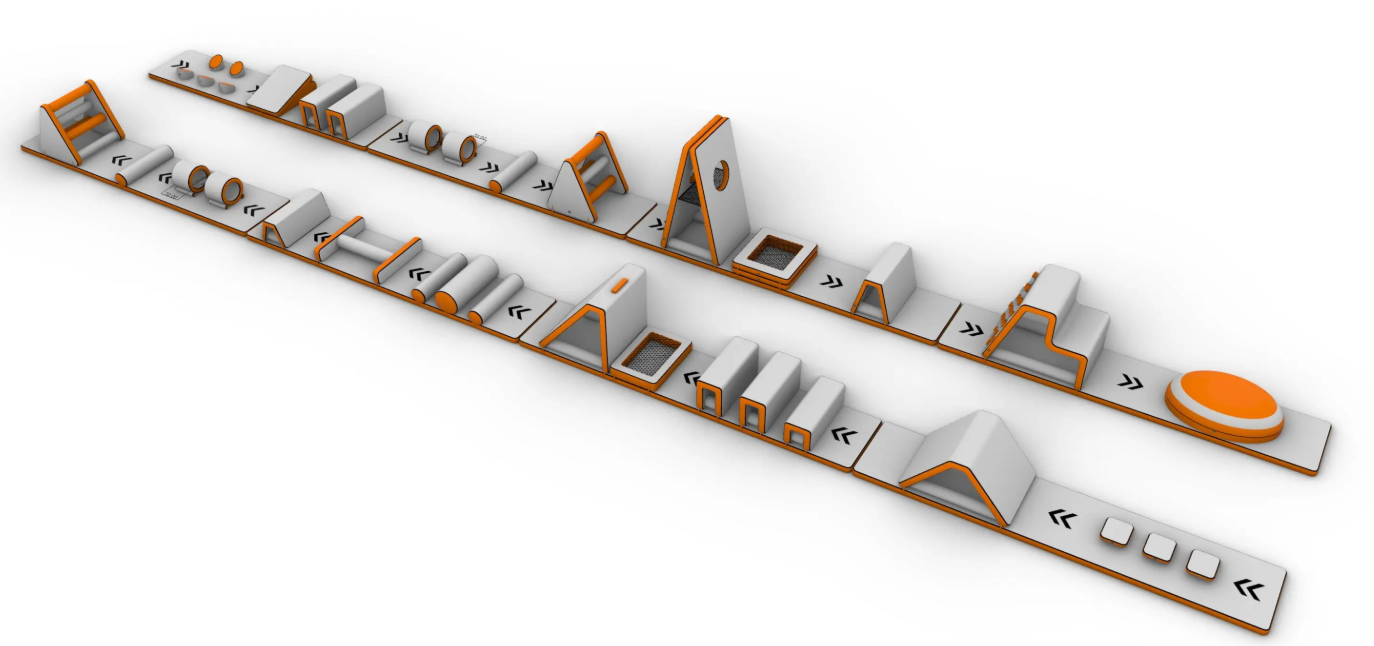
The Distance Changes Everything
The most obvious difference is how long you are out there. An endurance obstacle race can run anywhere from five kilometers to twenty or more. You are moving for hours. Your body has to manage energy, pace itself, and keep going long after you want to stop. A sprint format is short. Some races last just over twenty seconds. You are going all out from the start. There is no pacing. There is no saving something for later. It is full gas until you hit the finish.
That distance difference changes everything downstream. In an endurance race, every movement has to be efficient. You cannot waste energy. You cannot burn out on the first obstacle. In a sprint, efficiency matters too, but in a different way. You need to be explosive. You need to hit every move with maximum power because you do not have time to recover. The pace is completely different. The feel is completely different.
What the Body Endures
In a long race, your body goes through stages. The first few kilometers feel good. Then you settle into a rhythm. Then the fatigue starts to creep in. Your form breaks down. Your mind starts wandering. And somewhere around the halfway point, you have to decide if you really want to keep going. That is the endurance test. It is not just about strength. It is about stubbornness. It is about refusing to quit when everything hurts.
The obstacles in an endurance race reflect that. They are not necessarily harder technically. They are just placed at moments when you are already tired. A wall that would be easy fresh becomes a struggle after ten kilometers. A balance beam that would be simple becomes a wobbling nightmare when your legs are shaking. The obstacle itself does not change. Your state does. That is what makes it hard.
In a sprint, the body does not have time to fade. You are redlining from the start. Your lungs burn. Your muscles scream. But it is over fast. The challenge is different. It is about holding perfect form under max effort. It is about not making a mistake when every move has to be exactly right. There is no time to think. You just react.
Technical Demands
Sprint formats tend to be more technical. Because the race is short, obstacles can be more complex. You might see combinations that require multiple skills in quick succession. A jump into a swing into a balance. The athlete has to flow from one move to the next without hesitation. There is no room for error. One slip and the race is over.
Endurance races keep obstacles more straightforward. Not because athletes cannot handle complex moves, but because complexity when you are exhausted is dangerous. A simple wall climb. A straightforward carry. A basic crawl. The challenge is not in figuring out the move. It is in doing it after hours of running. The obstacles are tools to test your diminishing capacity, not puzzles to solve.
Mental Game
The mental side of these two formats is night and day. In an endurance race, you have hours of internal conversation. Your brain will try to talk you into quitting a hundred times. You have to argue back. You have to find reasons to keep moving when your body is giving you every reason to stop. It is a battle against yourself as much as against the course.
In a sprint, there is no time for that internal noise. It is pure focus. You are locked in for thirty seconds or a minute. There is no room for doubt. You just execute. The mental challenge is about staying present, not letting the speed rattle you, not letting the crowd distract you. It is a different kind of pressure.
Training Differences
Athletes training for these formats train differently. Endurance athletes log miles. They build a base. They practice moving efficiently when tired. They do long sessions that simulate the grind of a race. They train their bodies to burn fuel slowly and keep going.
Sprint athletes train for power. They do short, intense intervals. They practice obstacles over and over until the movement is automatic. They work on explosive starts and fast transitions. Their training looks more like a track workout than a long run. Both are hard. Just hard in different ways.
Equipment Considerations
The equipment used in these formats reflects their demands. Endurance races need obstacles that are durable and safe over thousands of athletes. They need to hold up to mud, weather, and constant use. Simpler designs often work best because there is less to break. A solid wall. A sturdy carry. A reliable crawl.
Sprint races can use more specialized equipment. Because the volume of athletes is lower and the races are shorter, you can have obstacles that are more intricate. Things that require precise setup. Things that might need more maintenance. The trade off is worth it for the spectacle. Sprint races are designed to be exciting to watch. The obstacles play a big part in that.
Who Shows Up
The athletes drawn to these formats are different too. Endurance racers tend to be grinders. They like the long haul. They like knowing they can outlast everyone else. They are patient. They are stubborn. They find satisfaction in covering distance and overcoming the slow burn of fatigue.
Sprint athletes are often former gymnasts, climbers, or track people. They like speed. They like explosive movement. They like the pressure of a short, intense effort. They are thrill seekers. They want to test their limits in a burst, not over hours. Both types are athletes. Just different kinds.
The Spectator Experience
If you are watching, the experience is completely different. An endurance race is hard to spectate. The course is spread out over kilometers. You see a moment here and there. You cheer as people go by. But you do not see the whole story.
A sprint race is built for viewers. The course is compact. You can see the whole thing from one spot. You watch athletes fly through obstacles in seconds. You see the wins and the failures up close. It is dramatic. It is exciting. That is why sprint formats work well for TV and events. They are made to be seen.
Both Have Their Place
None of this is to say one is better than the other. They are just different. Some people love the grind of a long race. They love the feeling of covering miles and conquering obstacles when they are dead tired. Others love the intensity of a sprint. They love the pure focus and the explosive effort.
The best thing about obstacle racing is that both exist. You can find your format. You can find your people. You can find the challenge that fits how you are built. And if you are like a lot of people, you might end up doing both. Because once the sport gets in your blood, you want to test yourself every way you can.