 EN
EN

How to design a versatile obstacle course for different skill levels?
Have you ever seen a race where some participants seamlessly navigate the challenges while others barely get past the first one? The best events are the ones that can engage everyone. Designing an obstacle course that excites both newcomers and experienced athletes is essential for building a strong and committed community. The objective is to create a single environment where an entire family, a fitness beginner, and an experienced racer can all have an equally challenging, rewarding, and enjoyable experience. This guide will help you understand the philosophy and practical steps to build an inclusive, scalable, and thrilling course.
The Core Philosophy: Universal Design for Inclusive Thrills
The first step requires a major mindset shift. Designing for a single "average" athlete will not produce exciting results. Instead, embrace Universal Design. This means creating an environment where the core challenge is accessible to all, but the method of completion or level of mastery can vary.
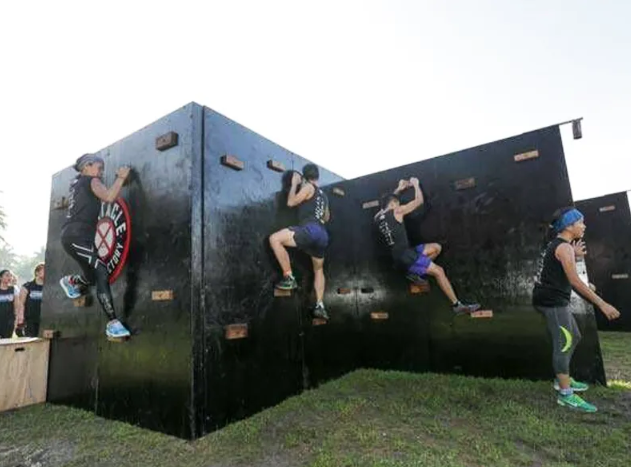
Take a wall, for example: a novice may use a lower section or a helper log, an intermediate athlete climbs the standard face, and an expert does it one-handed or races to the top. The obstacle is the same, but the experience is personalized. This approach ensures no one feels excluded or underwhelmed. It transforms your course from a static test into a dynamic playground that grows with its participants, encouraging them to return and conquer the next level.
Foundational Design Principles: Building Blocks for Versatility
With an inclusive mindset, you can apply concrete design principles that make versatility a reality. These principles are the blueprint for your course.
Modularity and Flexibility
Your greatest asset is flexibility. Invest in a system of obstacles that can be easily rearranged, modified, or combined. Think of movable walls with interchangeable grips, cargo nets that can be hung at different angles, or hurdle heights that can be adjusted. This allows you to create multiple course layouts from the same equipment set—a shorter, simpler loop for community days and a longer, complex one for competitive events. Partners like Obstacle Formula excel here, offering a vast catalog of over 300 distinct, interoperable obstacle designs, letting you refresh your course regularly without constant new investment.
Scalable Challenge at Every Station
Every major obstacle should have built-in scalability, often achieved through "choice lanes" or adjustable components.
For a monkey bar rig, you might have:
Lane 1 (Beginner): Lower bars, closer spacing.
Lane 2 (Intermediate): Standard bars at competition height.
Lane 3 (Advanced): Widely spaced bars, rotating handles, or a sloping configuration.
Similarly, a rope climb can offer a knotted rope, a standard rope, and a slick, thick rope. This "choose your challenge" model empowers participants, reduces bottlenecking, and visibly demonstrates progression—a powerful motivator.
The Principle of Adaptive Flow
The course's layout must accommodate all paces. Design strategic bypasses or alternative options at key technical obstacles. For instance, a complex rig could have a simple under-or-around path. This isn't a "cheat" lane; it's a design choice that keeps the event moving, prevents dangerous logjams, and allows athletes to compete within their skill set. The routing should feel intuitive, with clear visual cues for different paths, creating a seamless experience for everyone.
Choosing the Right Obstacles: A Versatile Toolkit
Your equipment choices bring your philosophy to life. You need a versatile toolkit that serves a wide range of athletes.
The Versatile Classics
Focus on obstacles that are simple in concept but rich in variation. Walls, ropes, carries, and crawls are perfect. A simple wall can be a crawl-under, a step-over, a vault, or a climb depending on its height. A sandbag carry's difficulty is scaled by weight and distance. These foundational elements are the bedrock of your course, offering immediate accessibility and deep layers of challenge.
Technical Rigs with Multiple Solutions
Modern obstacle course design shines with multi-rig structures. These are like adult jungle gyms, combining rings, ropes, bars, and ladders in one frame. The key is to design them with multiple grip types, levels, and pathways. An athlete might swing across on rings or traverse laterally on bars. This invites creativity and problem-solving, allowing participants to use their strengths. Sourcing from designers who understand competitive functional fitness is crucial for safety under dynamic, high-load use.
Incorporating Balance and Agility Elements
Don't neglect skills that challenge the nervous system! Balance beams, slacklines, and pole traverses add a critical dimension. Scale these by width, height off the ground, and stability. A beginner beam is wide and low; an advanced version is narrow, elevated, or has unstable elements. These obstacles are great equalizers, often challenging the brute-strength athlete and rewarding the focused, agile one, further broadening your course's appeal.
Operational Strategies for Multi-Level Events
Even the best-designed course needs smart operations to shine.
Clear Tiered Branding and Communication
Communicate the options clearly. Use engaging names like "Open Flow," "Competitive Lap," and "Championship Loop" instead of generic "Hard" or "Easy" labels. Provide detailed maps and descriptions so participants can self-select appropriately. This manages expectations and reduces on-course confusion.
Dynamic Staffing and Empowered Coaching
Your staff and volunteers are the ambassadors of versatility. Train them to encourage, spot safely, and offer quick technique tips. Empower them to suggest alternative approaches to obstacles, helping a struggling participant find a way forward. Their positive intervention can turn a moment of frustration into a breakthrough, enhancing the participant's entire experience.
Fostering Community as the Ultimate Goal
A versatile course naturally fosters a powerful sense of community. You'll see advanced athletes cheering on beginners, and friends comparing their different challenge choices. Host clinics where experienced athletes can share techniques on the scalable obstacles you've provided. This creates a virtuous cycle where your course isn't just a place to race, but a hub for continuous skill development and shared experience.
Conclusion: Building a Destination, Not Just a Course
Designing for versatility is the ultimate expression of putting the participant first. It requires thoughtful planning, strategic equipment choices from experienced partners, and a commitment to inclusive excellence. When done right, you don't just build a course; you build a destination. A place where everyone, regardless of their starting point, can find their own personal victory and be inspired to reach for the next. That's how you create not just an event, but a lasting legacy in the world of obstacle sports.